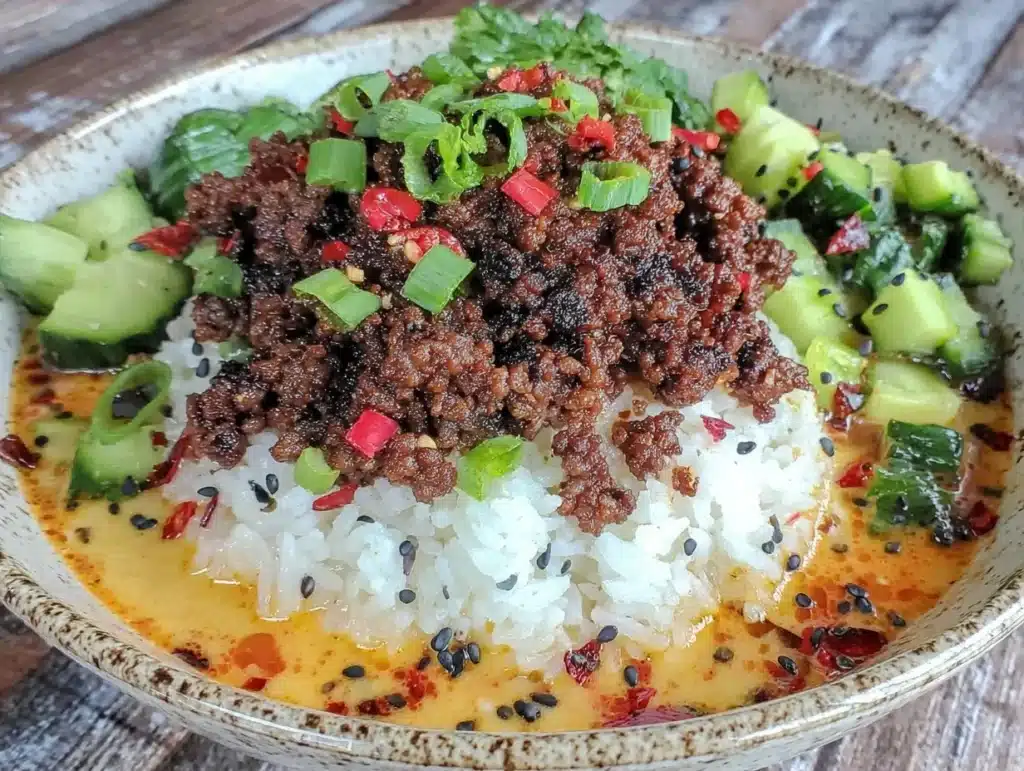
The smell of caramelized garlic hitting hot oil is basically the sound of my stress levels dropping to zero. It happened on a rainy Tuesday in November, the kind of night where your brain feels like it’s wrapped in wet wool. I was staring into my open fridge, looking for something that didn’t involve boiling water or peeling vegetables. That’s when I found a half-empty jar of gochujang, two thin-cut steaks, and a bag of spinach that was starting to look a little sad.
Honestly, I didn’t plan to make dinner. I just wanted warmth. But that’s how the Spicy Gochujang Beef Bowl was born. It wasn’t some fancy culinary experiment. It was just me, trying to salvage the evening. I threw the beef into a sizzling pan, dumped in the red paste, a splash of soy, and a kick of sesame oil. The result was so good that I actually forgot to check my phone for the delivery app.
If you’ve ever felt that same 7 PM dread, you know why this recipe matters. It’s not just about the heat from the chili paste. It’s about how quickly it comes together. You get that perfect balance of sweet, savory, and spicy in under fifteen minutes. It’s the kind of meal that feels indulgent but doesn’t leave you feeling heavy. I’ve made this Spicy Gochujang Beef Bowl over a dozen times now, and it’s become my secret weapon for busy weeknights.
Let’s face it, cooking after work is hard. But this dish doesn’t ask much of you. You just need a hot pan and a willingness to stir. The flavors build up fast, and before you know it, you’re sitting down with a bowl that tastes like it came from a trendy Seoul street food stall. It’s comforting, it’s fast, and it’s genuinely delicious. You’ll wonder why you ever bothered with frozen meals.
Why You’ll Love This Recipe
After testing this beef bowl recipe through countless Tuesday nights, I’ve realized it’s more than just a quick meal. It’s a reliable comfort zone. The beauty of this dish lies in its simplicity and the depth of flavor that comes from just a few key ingredients. Here is why this Spicy Gochujang Beef Bowl has earned a permanent spot in my weekly rotation:
- Quick & Easy: This comes together in under 15 minutes. From chopping to plating, it’s faster than waiting for a pizza delivery. Perfect for those exhausted weeknights when you just want to eat.
- Simple Ingredients: You likely have 80% of these items in your pantry right now. Gochujang, soy sauce, sesame oil, and ground or sliced beef are staples that don’t require a special trip to an Asian market.
- Perfect for Busy Parents: Kids who are usually picky eaters often love the sweet and spicy kick. It’s a great way to sneak in some veggies if you serve it over rice or noodles.
- Crowd-Pleaser: Whether you are feeding a partner, a roommate, or just yourself, this flavor profile hits all the right notes. It’s universally liked without being bland.
- Unbelievably Delicious: The texture of the beef, coated in that sticky, rich sauce, is next-level comfort food. It’s savory, slightly sweet, and has just enough heat to keep you interested.
What makes this recipe different from the rest is the balance. Many gochujang recipes can be one-dimensional, just pure heat. But by adding a touch of sugar and plenty of garlic, you create a complex sauce that clings to every bite. It’s not just another version of beef and rice. It’s your best version of a quick weeknight dinner. It’s the kind of meal that makes you close your eyes after the first bite. It’s comfort food reimagined—healthier, faster, but with the same soul-soothing satisfaction.
What Ingredients You Will Need
This recipe uses simple, wholesome ingredients to deliver bold flavor and satisfying texture without the fuss. The magic really happens in the sauce, so choosing the right gochujang matters. I recommend using a reputable brand like Sunchang for the most authentic, fermented depth. Here is what you need to gather:
- Beef: 1 lb (450g) of thin-sliced flank steak or sirloin. You can also use ground beef for an even quicker cook, though sliced beef gives a better chew. Look for meat that is lean but not dried out.
- Gochujang: 3 tablespoons. This is the Korean chili paste that gives the dish its signature red color and spicy kick. Make sure it’s the paste, not the powder.
- Soy Sauce: 2 tablespoons. Use a low-sodium version if you are watching your salt intake. It adds the necessary umami backbone.
- Sesame Oil: 1 tablespoon. Toasted sesame oil is essential here. Don’t use the raw version; you want that nutty aroma.
- Sugar: 1 tablespoon. Brown sugar works best to add a molasses-like richness, but white sugar works too.
- Garlic: 3 cloves, minced. Fresh garlic is non-negotiable. Powdered garlic won’t give you that sharp, aromatic punch.
- Ginger: 1 teaspoon, freshly grated. This adds a bright, zesty note that cuts through the richness of the beef.
- Green Onions: 2 stalks, sliced. These provide a fresh, oniony crunch to top the bowl.
- Sesame Seeds: 1 tablespoon, toasted. A sprinkle on top adds texture and visual appeal.
- Cooked Rice: 2 cups. Jasmine rice is traditional, but brown rice or cauliflower rice work well for lower carb options.
- Vegetables: 1 cup of spinach, bok choy, or broccoli florets. Fresh greens wilt nicely in the residual heat.
- Egg: 1 large egg, fried or soft-boiled. A runny yolk adds a creamy element that mixes with the spicy sauce beautifully.
If you are new to Korean cooking, don’t worry about finding every specialty item. The base flavors are very forgiving. For the beef, if you can’t find pre-sliced steak, ask your butcher to slice it thinly for you. This ensures it cooks evenly and quickly. Also, look for firm, small-curd cottage cheese if you were making a dip, but for this bowl, stick to the beef and veggies. In summer, you might swap the rice for cold soba noodles for a refreshing variation.
Equipment Needed
You don’t need a fancy kitchen to make this Spicy Gochujang Beef Bowl. A standard home setup works perfectly. The most important tool is a large skillet or wok. I prefer a carbon steel wok because it heats up fast and distributes heat evenly, which is crucial for getting that slight char on the beef. If you don’t have a wok, a large non-stick skillet is a great alternative.
A sharp chef’s knife is necessary for slicing the beef and chopping the green onions. Dull knives are dangerous and make prep slower. I also recommend having a small mixing bowl ready to whisk the sauce ingredients together before you start cooking. This prevents you from burning the garlic while you’re looking for the soy sauce.
A rice cooker is a game-changer if you eat rice often. It keeps the rice warm and fluffy while you cook the beef. If you don’t have one, a standard pot with a tight-fitting lid works fine. Just remember to let the rice rest for ten minutes after cooking to let the steam redistribute. For budget-friendly options, a basic stainless steel frying pan is durable and lasts for years. Avoid thin aluminum pans as they can burn the sauce easily.
Preparation Method
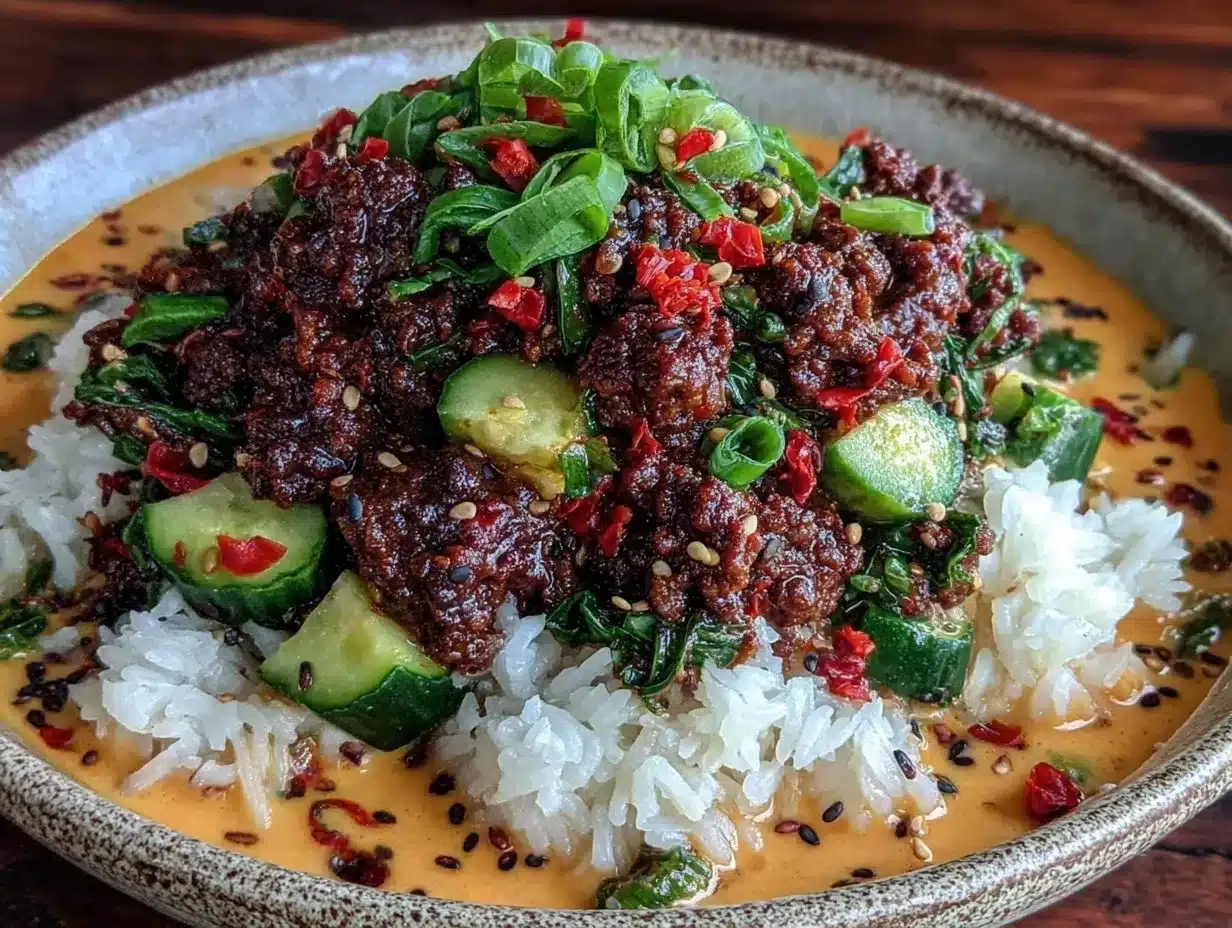
Making this Spicy Gochujang Beef Bowl is straightforward, but timing is everything. Follow these steps carefully to ensure the beef stays tender and the sauce is perfectly balanced.
Step 1: Prepare the Sauce (5 minutes)
In a small bowl, whisk together the gochujang, soy sauce, sesame oil, sugar, minced garlic, and grated ginger. Mix until the sugar is fully dissolved. The sauce should be thick and glossy. Taste it now. If you want it sweeter, add a little more sugar. If you want it spicier, add a pinch of red pepper flakes. Set this aside.
Step 2: Prep the Beef (2 minutes)
Pat the beef dry with paper towels. This is a crucial step I learned the hard way. Wet beef steams instead of searing. If you are using sliced beef, separate the pieces so they don’t clump together. If using ground beef, break it into small crumbles. Season lightly with black pepper.
Step 3: Cook the Beef (3-4 minutes)
Heat your skillet or wok over medium-high heat. Add a tablespoon of neutral oil. Once the oil is shimmering, add the beef. Spread it out in a single layer if possible. Let it cook undisturbed for about a minute to get a good sear. Then, stir and cook until just browned. Do not overcook the beef, or it will become tough. Remove the beef from the pan and set it aside on a plate.
Step 4: Cook the Vegetables (2 minutes)
In the same pan, add a little more oil if needed. Toss in your chosen vegetables. Sauté them until they are tender-crisp. Spinach only needs about 30 seconds. Broccoli might take two minutes. Remove the vegetables and set them aside with the beef.
Step 5: Combine and Glaze (2 minutes)
Reduce the heat to medium. Pour the prepared sauce into the pan. Let it bubble for about 30 seconds to thicken slightly. Return the beef and vegetables to the pan. Toss everything together, ensuring every piece is coated in the sticky, spicy sauce. Cook for another minute to let the flavors meld.
Step 6: Assemble the Bowl (1 minute)
Place a generous portion of hot rice in a bowl. Top with the spicy beef and vegetable mixture. Slice the green onions and sprinkle them over the top. Add a toasted sesame seed garnish. If you are using an egg, place it on top now. Serve immediately while the rice is still warm.
How do I prevent the beef from becoming tough?
The key is high heat and quick cooking. Do not overcrowd the pan. If you cook too much beef at once, the temperature drops, and the meat steams. Cook in batches if necessary.
Can I make this ahead of time?
The sauce can be made a day in advance. The beef is best cooked fresh, but you can prep the veggies and slice the meat the night before to save time.
Cooking Tips & Techniques
Having cooked this Spicy Gochujang Beef Bowl many times, I’ve picked up a few tricks to make it even better. First, always taste your sauce before adding it to the pan. Gochujang brands vary wildly in saltiness and sweetness. Adjusting the sugar or soy sauce beforehand ensures you won’t ruin the whole dish.
Another common mistake is burning the garlic. Gochujang contains sugar, which caramelizes quickly. If you add the garlic too early or cook on too high a heat, it will turn bitter. Keep the heat at medium-high, not high. Stir constantly once the sauce hits the pan.
For the best texture, use a well-seasoned wok or a heavy-bottomed skillet. Thin pans heat up and cool down too fast, leading to uneven cooking. Also, don’t skip the step of patting the beef dry. Moisture is the enemy of a good sear. If the beef is wet, it will release steam and boil in its own juices instead of frying.
Multitasking is your friend here. Start the rice first, as it takes the longest. While the rice cooks, prep your sauce and veggies. By the time the rice is done, you’ll be ready to cook the beef in minutes. This keeps the entire process smooth and stress-free.
Variations & Adaptations
This recipe is very flexible, so you can adapt it to your dietary needs or taste preferences. Here are a few ideas to try:
- Chicken Version: Swap the beef for thinly sliced chicken breast or thigh. Chicken takes slightly less time to cook, so watch the pan closely.
- Tofu Option: For a vegetarian version, use extra-firm tofu. Press the tofu first, then cube it and pan-fry until crispy before adding the sauce. It absorbs the flavor beautifully.
- Low-Carb/Keto: Skip the rice and serve over cauliflower rice or zucchini noodles. The sauce is naturally low-carb, so this works well.
- Mild Heat: If you are sensitive to spice, reduce the gochujang to 1 tablespoon and add a little more sugar to balance it out.
- Seafood Twist: Shrimp works great in this sauce. Cook them for just 2 minutes until pink, then toss in the sauce.
I once tried making this with pork belly, and it was incredibly rich and delicious. The fat from the pork pairs well with the spicy sauce. It’s a great variation for weekends when you have more time to enjoy the meal.
Serving & Storage Suggestions
This Spicy Gochujang Beef Bowl is best served immediately. The rice should be hot and fluffy, contrasting with the warm, sticky beef. Garnish with fresh green onions and sesame seeds for a pop of color. A fried egg on top is highly recommended, as the runny yolk adds a creamy richness that balances the heat.
For storage, let any leftovers cool to room temperature. Store them in an airtight container in the refrigerator for up to 3 days. The flavors actually improve after a day as the beef marries with the sauce. To reheat, use a microwave with a splash of water to keep the rice moist. Alternatively, reheat in a skillet over low heat, adding a little water to loosen the sauce.
You can also freeze the beef mixture, but the texture of the vegetables may change. It’s best to freeze just the beef and sauce, then add fresh veggies when reheating. This dish travels well for lunchboxes, making it a practical choice for work meals.
Nutritional Information & Benefits
This bowl provides a good balance of protein, carbohydrates, and fats. Beef is an excellent source of iron and B vitamins, which help with energy levels. Gochujang contains capsaicin, which may boost metabolism slightly. The vegetables add fiber and essential micronutrients. However, be mindful of the sodium content from the soy sauce and gochujang. Using low-sodium soy sauce and controlling the amount of paste can help manage this. Overall, it’s a satisfying meal that keeps you full without feeling weighed down.
Conclusion
The Spicy Gochujang Beef Bowl is more than just a quick dinner. It’s a reminder that good food doesn’t have to be complicated. With just a few ingredients and fifteen minutes, you can create a meal that is deeply satisfying and full of flavor. I hope this recipe brings you the same comfort and joy it has brought me on those long, tiring weeknights. Try it your way, add your favorite veggies, and enjoy the process. Don’t forget to share your creations or ask questions in the comments below. Happy cooking!
Frequently Asked Questions
What is gochujang?
Gochujang is a fermented Korean chili paste. It is spicy, sweet, and savory. It is a staple in Korean cuisine and adds a deep, complex flavor to dishes.
Can I use gochugaru instead of gochujang?
Gochugaru is Korean chili flakes. It is dry and spicy but lacks the sweetness and thickness of gochujang. You can use it, but you will need to add sugar and a thickener like cornstarch to mimic the sauce.
How spicy is this dish?
It is moderately spicy. The heat level depends on the brand of gochujang and the amount you use. You can adjust the spice by adding more or less paste.
Can I make this in an Instant Pot?
Yes, you can cook the beef in the Instant Pot, but you will lose the seared texture. It is better to cook the beef in a pan for the best flavor.
What sides go well with this bowl?
Simple sides like kimchi, pickled cucumbers, or a fresh salad work well. The spicy beef pairs nicely with cool, refreshing sides.
Pin This Recipe!
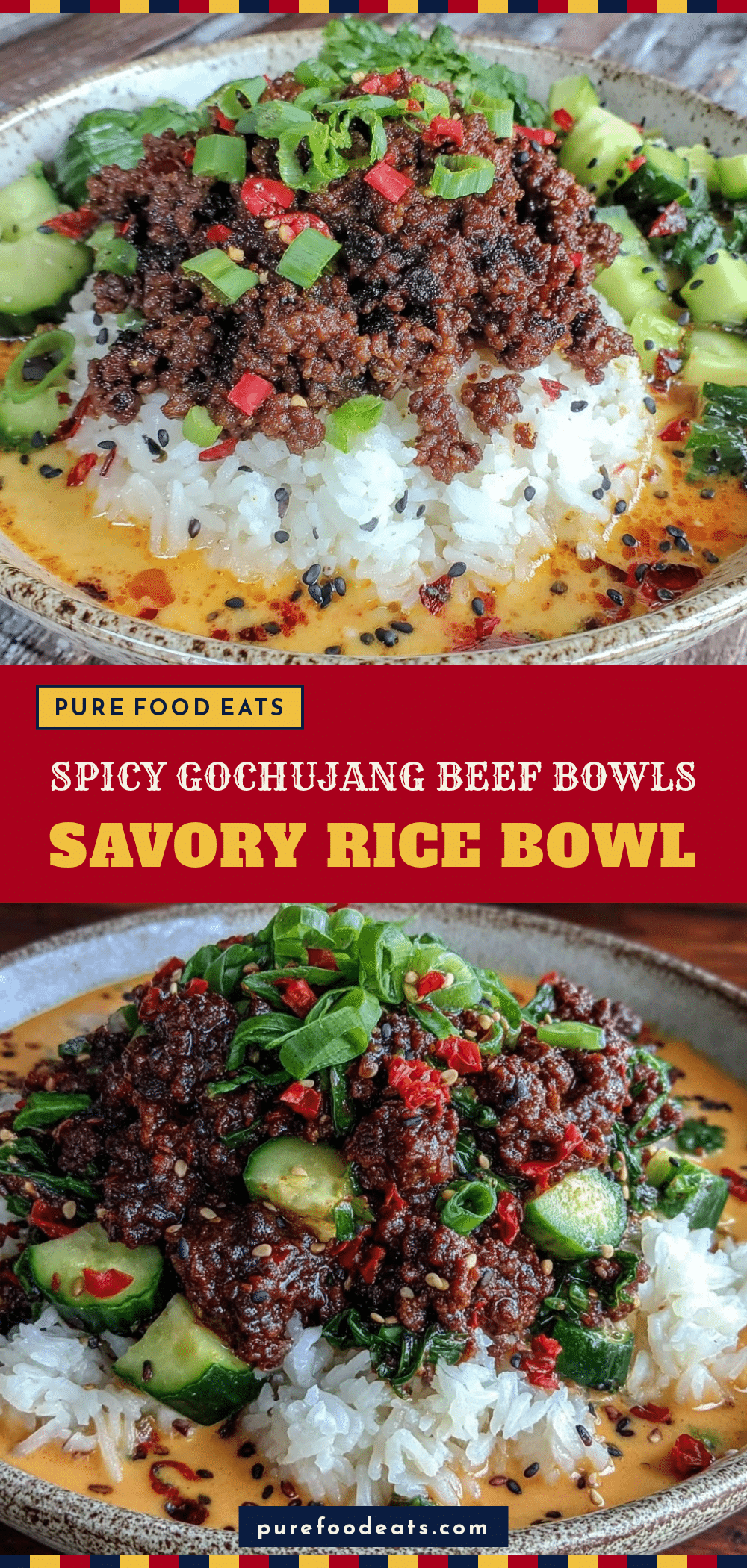

Spicy Gochujang Beef Bowl
- Total Time: 15 minutes
- Yield: 2 servings 1x
Description
A quick and flavorful 15-minute weeknight dinner featuring thin-sliced beef in a sweet, savory, and spicy gochujang sauce, served over rice with vegetables and an optional fried egg.
Ingredients
- 1 lb (450g) thin-sliced flank steak or sirloin
- 3 tablespoons gochujang (Korean chili paste)
- 2 tablespoons soy sauce (low-sodium recommended)
- 1 tablespoon toasted sesame oil
- 1 tablespoon brown sugar
- 3 cloves garlic, minced
- 1 teaspoon freshly grated ginger
- 2 stalks green onions, sliced
- 1 tablespoon toasted sesame seeds
- 2 cups cooked rice (Jasmine, brown, or cauliflower rice)
- 1 cup vegetables (spinach, bok choy, or broccoli florets)
- 1 large egg (fried or soft-boiled, optional)
- 1 tablespoon neutral oil (for cooking)
Instructions
- In a small bowl, whisk together gochujang, soy sauce, sesame oil, sugar, minced garlic, and grated ginger until the sugar is dissolved. Set aside.
- Pat the beef dry with paper towels to ensure a good sear. Season lightly with black pepper.
- Heat a large skillet or wok over medium-high heat with neutral oil. Add beef in a single layer and cook undisturbed for 1 minute to sear, then stir and cook until just browned (3-4 minutes total). Remove beef from pan and set aside.
- In the same pan, add a little more oil if needed and sauté vegetables until tender-crisp (2 minutes). Remove and set aside with the beef.
- Reduce heat to medium. Pour the prepared sauce into the pan and let it bubble for 30 seconds to thicken.
- Return the beef and vegetables to the pan. Toss everything together to coat in the sauce and cook for another minute to meld flavors.
- Place hot rice in a bowl. Top with the beef and vegetable mixture. Garnish with sliced green onions and toasted sesame seeds. Add a fried egg on top if desired. Serve immediately.
Notes
Pat the beef dry before cooking to prevent steaming and ensure a good sear. Do not overcrowd the pan; cook in batches if necessary. Gochujang brands vary in saltiness, so taste the sauce before adding it to the pan. The sauce can be made a day in advance. Leftovers can be stored in the refrigerator for up to 3 days.
- Prep Time: 10 minutes
- Cook Time: 5 minutes
- Category: Main Course
- Cuisine: Korean
Nutrition
- Serving Size: 1 bowl
- Calories: 550
- Sugar: 8
- Sodium: 900
- Fat: 22
- Saturated Fat: 7
- Carbohydrates: 45
- Fiber: 2
- Protein: 35
Keywords: gochujang, beef bowl, korean food, quick dinner, weeknight meal, spicy beef, easy recipe, 15 minute dinner