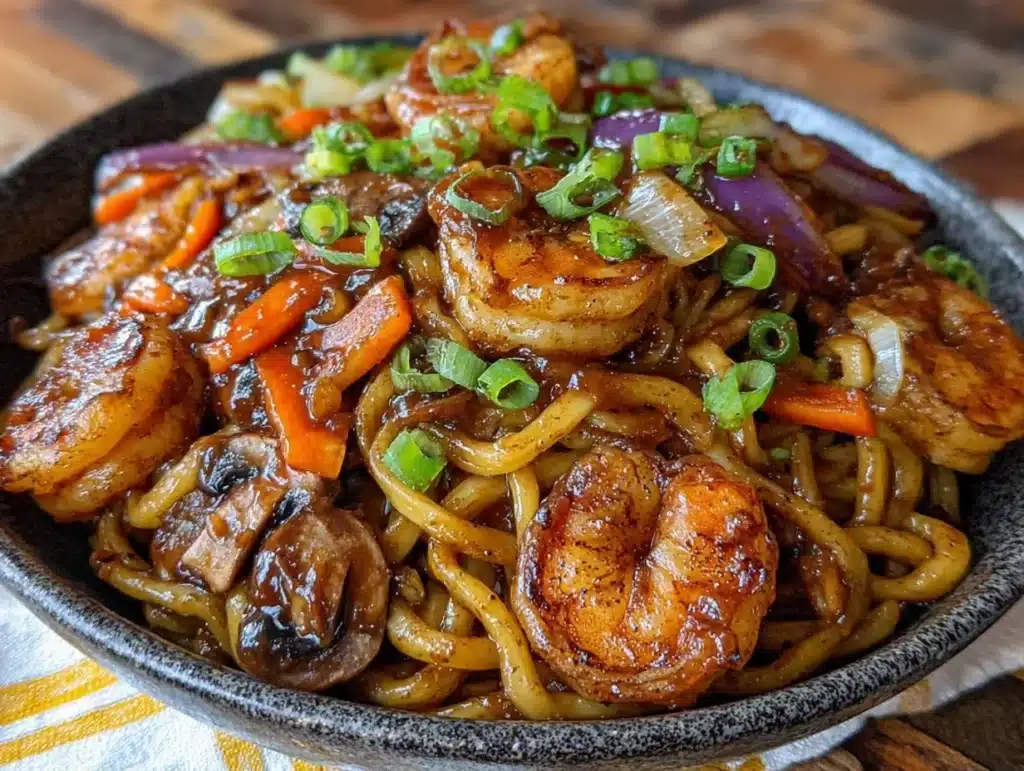
The smell of searing shrimp hitting hot oil is the kind of aroma that stops traffic. Seriously, if you’ve ever walked past a Japanese restaurant at 7 PM, you know that specific, savory pull on your nose. I remember the first time I made crispy yaki udon with shrimp in my tiny apartment kitchen. It was raining, I was exhausted, and the takeout menu looked like a trap. I didn’t want greasy, soggy noodles. I wanted something with crunch, something that felt like a hug but didn’t leave me feeling heavy.
So, I raided my pantry. I had some dried udon noodles gathering dust, a bag of frozen shrimp, and a bottle of soy sauce that was half-empty. Honestly, I expected a disaster. But what came out of that wok was a revelation. The noodles got this incredible, golden-brown crust on the bottom. The shrimp was sweet and briny. It wasn’t just dinner; it was a victory.
Since then, I’ve made this crispy yaki udon with shrimp version dozens of times. It’s become my go-to when I need comfort food that actually makes me feel good. You know how some meals leave you sluggish? This one? It’s light, protein-packed, and deeply satisfying. It’s the perfect balance of savory, sweet, and crunchy. If you’re tired of ordering delivery and waiting twenty minutes for cold food, this recipe is your new best friend. Let’s get cooking.
Why You’ll Love This Recipe
There is a specific magic that happens when udon noodles meet high heat. It’s not just about the taste; it’s about the texture. Most stir-fries end up mushy. Not this one. I’ve tested this crispy yaki udon with shrimp recipe enough times to know exactly how to get that restaurant-quality crisp without frying the noodles in a vat of oil. It’s all about technique, patience, and a really good pan.
Here is why this dish has earned a permanent spot in your weekly rotation:
- Quick & Easy: You can have this on the table in under 20 minutes. The shrimp cooks fast, and the sauce comes together while the noodles sear. It’s perfect for those busy weeknights when you’re hungry but don’t have hours to spend chopping.
- Simple Ingredients: You likely have most of this already. Udon noodles, shrimp, soy sauce, mirin, and some veggies. No fancy trips to the Asian grocery store required for the basics. It’s pantry-friendly comfort food.
- Perfect for Meal Prep: While best fresh, this reheats well if you’re making it for lunch the next day. The flavors actually meld a bit more, making it even better on day two.
- Crowd-Pleaser: Kids love the chewy noodles. Adults love the savory sauce. It’s a win-win. I’ve served this to picky eaters who usually hate vegetables, and they didn’t even notice the carrots.
- Unbelievably Delicious: That crispy bottom layer of noodles? It’s the star. It adds a nutty, toasted flavor that you just can’t get from boiling noodles and tossing them in sauce. It’s texture heaven.
This isn’t just another stir-fry. It’s a study in contrasts. Soft shrimp against crispy noodles. Sweet mirin against salty soy. It’s the kind of meal that makes you close your eyes after the first bite. It feels indulgent, but it’s actually pretty balanced. I love that it uses real ingredients doing the heavy lifting. No MSG packets or weird shortcuts. Just good food that tastes like you spent hours on it, when you really didn’t.
What Ingredients You Will Need
This recipe relies on simple, wholesome ingredients to deliver bold flavor and satisfying texture without the fuss. The beauty of yaki udon is that it lets the quality of the noodles and the freshness of the shrimp shine. You don’t need a long list of exotic spices. Just a few key items, chosen with care.
For the Noodles and Protein
- Udon Noodles: I recommend using fresh, refrigerated udon noodles for the best texture. They are softer and chewier than dried ones. If you can only find dried, look for thick varieties. You need about 400 grams (14 ounces). Some brands like Marutoku are reliable.
- Raw Shrimp: Go for medium to large shrimp, peeled and deveined. Fresh is best, but high-quality frozen works too. You’ll need about 300 grams (10.5 ounces). Look for shrimp that smell like the ocean, not fishy.
- Vegetables: I like a mix of textures. Thinly sliced carrots add sweetness. Napa cabbage provides volume and crunch. Green onions are essential for that fresh onion bite. You’ll need one medium carrot and two cups of shredded cabbage.
For the Yaki Sauce
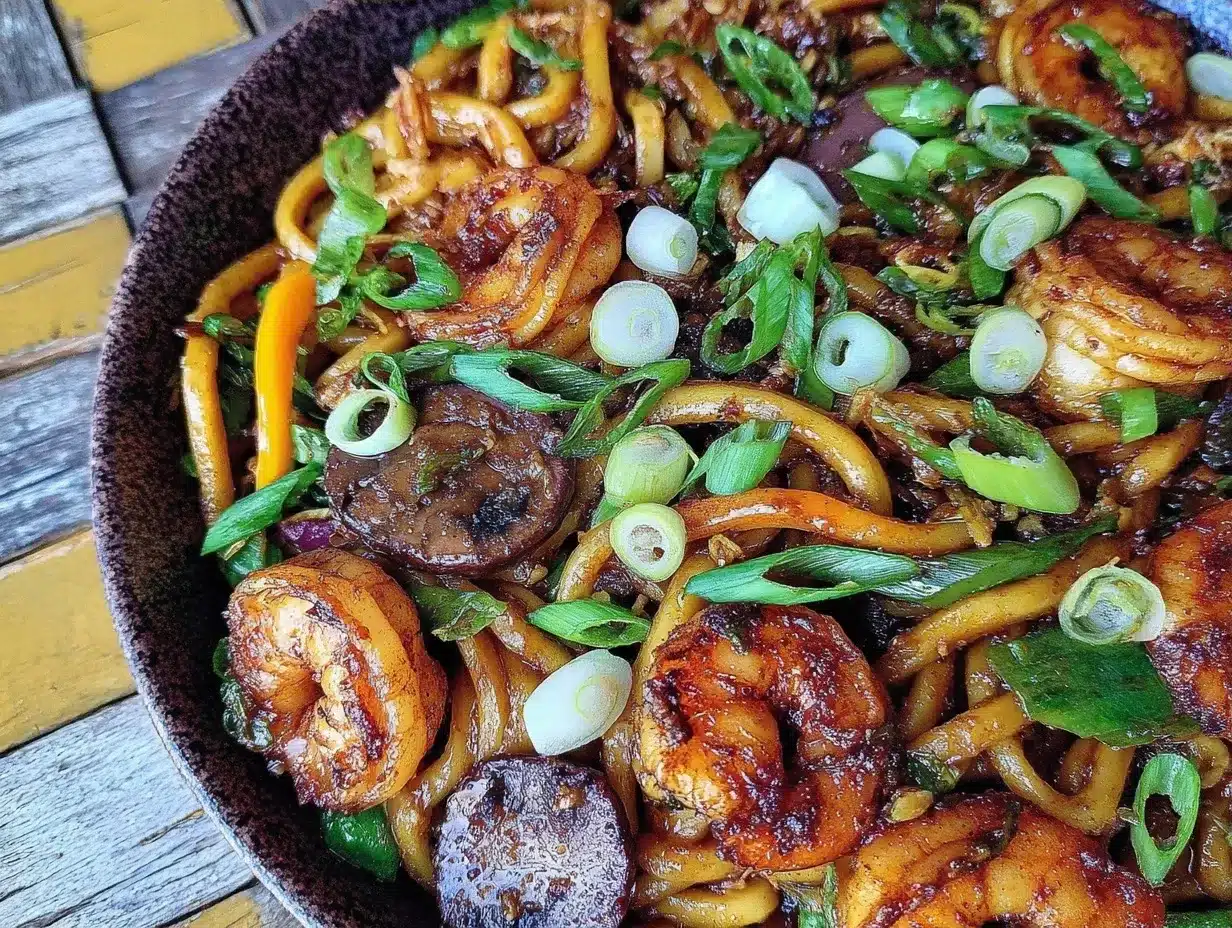
- Soy Sauce: This is the backbone of the flavor. Use a good quality Japanese soy sauce like Kikkoman. It’s less salty and more complex than Chinese soy sauce. You’ll need 3 tablespoons.
- Mirin: This sweet rice wine adds gloss and depth. It balances the saltiness of the soy. If you can’t find mirin, a mix of rice vinegar and a pinch of sugar works, but mirin is better. Use 2 tablespoons.
- Sake: Japanese cooking wine removes fishiness from the shrimp and adds aroma. It’s optional but highly recommended. Use 1 tablespoon.
- Sesame Oil: Just a teaspoon at the end adds that nutty finish. Don’t skip it.
- Garlic and Ginger: Fresh is non-negotiable here. Mince one clove of garlic and grate half a teaspoon of fresh ginger. Powdered versions just don’t have the same punch.
For the Garnish
- Shichimi Togarashi: This Japanese seven-spice blend adds a little heat and complexity. It’s optional but adds that authentic restaurant touch.
- Chopped Scallions: For a fresh, bright finish on top.
Equipment Needed
You don’t need a fancy kitchen to make this. The most important tool here is your pan. I highly recommend a carbon steel wok or a large cast-iron skillet. These retain heat better than non-stick pans, which is crucial for getting that crispy noodle bottom. If you only have a non-stick pan, it will work, but you might need to use a bit more oil to prevent sticking. A pair of chopsticks or a wide spatula is essential for tossing the noodles without breaking them. Also, have a sharp knife ready for prepping the veggies. I keep a mandoline for the carrots because it makes thin, even slices that cook quickly. Don’t forget a small bowl for mixing your sauce beforehand. Mixing it in the pan while things are burning is a rookie mistake I made more than once.
How to Make Crispy Yaki Udon With Shrimp
Let’s walk through the process. It’s simpler than it sounds, but order matters.
- Prep Your Ingredients: Start by boiling the udon noodles according to the package instructions. Usually, this takes 3-5 minutes for fresh noodles. Drain them and rinse with cold water to stop the cooking. Toss them with a teaspoon of sesame oil to prevent sticking. While the noodles cook, peel and devein the shrimp. Pat them very dry with paper towels. This step is critical for searing. Chop your carrots into thin matchsticks. Shred the cabbage. Mince the garlic and ginger. Mix your sauce ingredients (soy sauce, mirin, sake) in a small bowl.
- Season the Shrimp: In a small bowl, toss the dried shrimp with a pinch of salt and pepper. Let them sit while you heat the pan. This helps them absorb flavor.
- Sear the Shrimp: Heat your wok or skillet over medium-high heat. Add one tablespoon of neutral oil (like vegetable or canola). Once the oil is shimmering, add the shrimp in a single layer. Do not overcrowd the pan. Cook for about 1-2 minutes per side until pink and opaque. Remove the shrimp from the pan and set aside on a plate. Don’t clean the pan; that flavorful residue is gold.
- Cook the Veggies: Add another tablespoon of oil to the same pan. Add the carrots first, as they take longer to cook. Stir-fry for 2 minutes. Then add the cabbage and garlic/ginger. Cook for another minute until the cabbage starts to wilt but still has some crunch.
- Create the Crispy Base: This is the secret step. Push the veggies to the side of the pan. Add the drained udon noodles to the empty space. Press them down flat with your spatula. Let them sit undisturbed for 3-4 minutes. You want to hear a sizzling sound. This creates the crispy layer. If your pan isn’t hot enough, wait a bit longer.
- Toss and Sauce: Once the bottom is golden, gently mix the noodles with the veggies. Pour the sauce mixture over everything. Toss everything together quickly so the noodles get coated but don’t get soggy. Return the cooked shrimp to the pan. Toss for another minute to heat everything through.
- Finish and Serve: Turn off the heat. Drizzle with the remaining teaspoon of sesame oil. Taste and adjust seasoning if needed. Serve immediately in bowls, topped with chopped scallions and shichimi togarashi if you like some heat.
Why this method works
By searing the noodles separately, you get that texture. By cooking the shrimp first, you avoid overcooking them. By mixing the sauce separately, you ensure even distribution. It’s all about control.
Cooking Tips & Techniques
I’ve made this recipe enough times to know where things can go wrong. Here is how to avoid common pitfalls. First, don’t skip drying the shrimp. Wet shrimp steam instead of sear. You want a nice brown crust on them, not gray, soft shrimp. Second, heat management is key. Your pan needs to be hot before you add the noodles. If it’s too cool, the noodles will stick and tear. If it’s too hot, the garlic will burn in seconds. Medium-high is the sweet spot.
Another tip: don’t use too much sauce. Udon noodles are like sponges. Too much liquid and you end up with soup noodles, not crispy yaki udon. The sauce should coat the noodles, not drown them. Also, if you are using dried udon, soak them in warm water for 30 minutes before boiling. This helps them rehydrate evenly. Fresh udon is faster but can be trickier to handle. Be gentle when tossing. Udon noodles can break if you’re too aggressive with your spatula. Use a lifting motion instead of chopping motions.
One personal failure I had was trying to cook the veggies and noodles at the same time from the start. The result? Mushy veggies and no crisp noodles. Separating the steps makes a huge difference. It takes an extra minute, but the texture payoff is worth it. Also, taste your sauce before pouring it on. Soy sauces vary in saltiness. If yours is very salty, add a splash of water or a pinch of sugar to balance it.
Variations & Adaptations
One of the best things about this crispy yaki udon with shrimp recipe is how adaptable it is. You can tweak it based on what you have or what you like.
- Vegetarian Version: Swap the shrimp for firm tofu. Press the tofu to remove water, cube it, and pan-fry it until golden before adding the veggies. It soaks up the sauce beautifully.
- Spicy Kick: Add a teaspoon of chili garlic sauce or sriracha to the sauce mixture. If you like heat, sprinkle extra shichimi togarashi on top. It adds a smoky warmth that pairs well with the sweetness of the mirin.
- Extra Veggies: Feel free to add sliced mushrooms, bell peppers, or bok choy. Mushrooms add an earthy umami flavor that complements the soy sauce. Just add them with the carrots so they have time to cook.
- Gluten-Free: Use tamari instead of soy sauce, and check your udon noodles. Most traditional udon is made from wheat, but some brands offer rice-based udon. It’s a bit softer, so be careful with the searing step.
- My Personal Twist: Sometimes I add a beaten egg to the pan after removing the shrimp. I scramble it lightly, then add the noodles. It adds protein and richness. It’s not traditional, but it’s delicious.
Serving & Storage Suggestions
This dish is best served immediately while the noodles are still crispy. Plate it in shallow bowls to show off the golden bottom. Garnish with plenty of green onions for color. It pairs well with a simple miso soup or a light cucumber salad to balance the richness. For drinks, a cold beer or a green tea works well.
If you have leftovers (which I doubt), store them in an airtight container in the refrigerator for up to 2 days. The noodles will soften as they sit, which is normal. To reheat, use a skillet over medium heat with a splash of water. This helps steam the noodles while re-crisping the bottom. Avoid the microwave if you can, as it makes the noodles rubbery. The flavors actually improve after a day, as the sauce has more time to penetrate the noodles. It’s great for a quick lunch reheated in a pan.
Nutritional Information & Benefits
This crispy yaki udon with shrimp is a balanced meal. Udon noodles provide carbohydrates for energy. Shrimp is a lean protein source, low in calories but high in nutrients like selenium and vitamin B12. The vegetables add fiber, vitamins A and C, and antioxidants. By using minimal oil and focusing on fresh ingredients, you avoid the heavy grease often found in takeout. It’s a meal that fuels your body without weighing you down. For those watching sodium, use low-sodium soy sauce and control the amount you use. It’s a flexible recipe that can fit into various dietary goals, especially when paired with extra veggies.
Conclusion
Making crispy yaki udon with shrimp at home is easier than you think. It replaces that takeout craving with something fresher, healthier, and infinitely more satisfying. The crunch of the noodles, the sweetness of the shrimp, and the savory sauce come together to create a meal that feels special. I love that it uses real ingredients doing the heavy lifting. It’s not about deprivation; it’s about enjoying good food. I hope you try this recipe. It’s become a staple in my kitchen for a reason. Let me know how it turns out in the comments! Did you add extra veggies? Did you use tofu instead? I’d love to hear your variations. Happy cooking!
Frequently Asked Questions
Can I use dried udon noodles?
Yes, you can. However, fresh refrigerated udon is preferred for the best chewy texture. If using dried, soak them in warm water for 30 minutes before boiling to ensure they rehydrate fully.
Why are my noodles sticking to the pan?
This usually happens if the pan isn’t hot enough or if there isn’t enough oil. Make sure your pan is preheated over medium-high heat before adding the noodles. Also, don’t move the noodles around too much during the searing phase.
Can I make this ahead of time?
It’s best made fresh. The noodles lose their crispness quickly. You can prep the veggies and mix the sauce in advance, but cook the dish right before serving.
What can I substitute for mirin?
If you don’t have mirin, you can use a mix of rice vinegar and a teaspoon of sugar. It won’t be exactly the same, but it will provide the necessary sweetness and acidity.
Is yaki udon healthy?
It can be! It depends on the ingredients. Using lean shrimp, lots of vegetables, and controlling the oil and sodium makes it a balanced meal. It’s much better than deep-fried versions or heavy cream-based sauces.
Pin This Recipe!
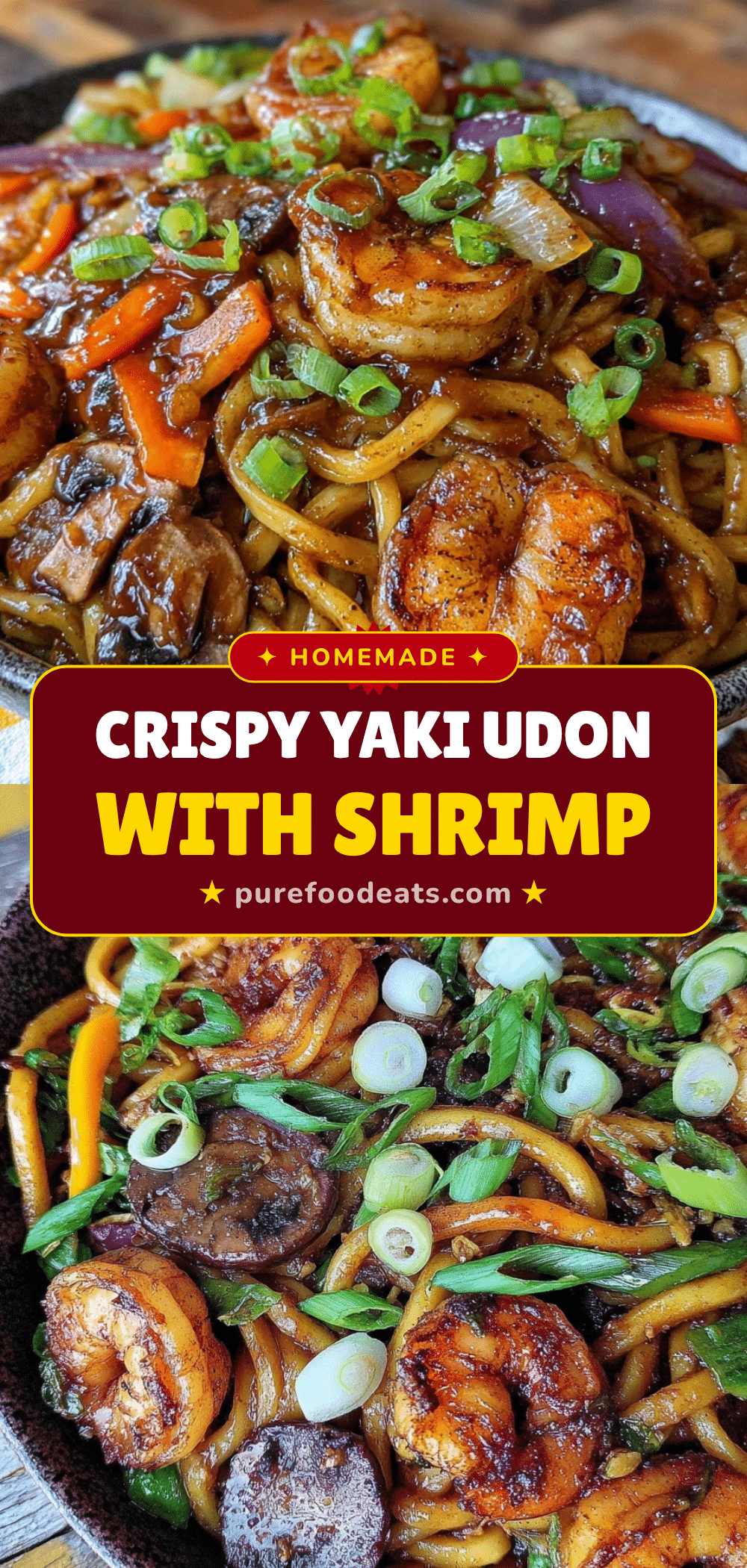

Crispy Yaki Udon With Shrimp: Best Healthy Stir-Fry
- Total Time: 20 minutes
- Yield: 4 servings 1x
Description
A quick and healthy stir-fry featuring golden-brown crispy udon noodles and seared shrimp, balanced with a savory soy-mirin sauce and fresh vegetables.
Ingredients
- 400 grams (14 ounces) fresh refrigerated udon noodles
- 300 grams (10.5 ounces) medium to large shrimp, peeled and deveined
- 1 medium carrot, thinly sliced into matchsticks
- 2 cups shredded Napa cabbage
- 2 green onions, chopped
- 3 tablespoons soy sauce
- 2 tablespoons mirin
- 1 tablespoon sake
- 2 tablespoons neutral oil (vegetable or canola), divided
- 1 teaspoon sesame oil, divided
- 1 clove garlic, minced
- 1/2 teaspoon fresh ginger, grated
- Salt and pepper to taste
- Shichimi togarashi for garnish (optional)
Instructions
- Boil udon noodles according to package instructions (3-5 minutes for fresh). Drain, rinse with cold water, and toss with 1/2 teaspoon sesame oil to prevent sticking.
- Pat shrimp very dry with paper towels. Toss with a pinch of salt and pepper.
- Heat 1 tablespoon neutral oil in a wok or skillet over medium-high heat. Sear shrimp in a single layer for 1-2 minutes per side until pink. Remove and set aside.
- Add remaining 1 tablespoon neutral oil to the pan. Stir-fry carrots for 2 minutes, then add cabbage, garlic, and ginger. Cook for 1 minute until cabbage wilts slightly.
- Push veggies to the side. Add drained noodles to the empty space and press flat. Sear undisturbed for 3-4 minutes until golden and crispy.
- Mix soy sauce, mirin, and sake in a small bowl. Pour sauce over noodles and veggies, tossing gently to coat.
- Return shrimp to the pan. Toss for 1 minute to heat through.
- Turn off heat, drizzle with remaining 1/2 teaspoon sesame oil, and serve immediately topped with green onions and shichimi togarashi.
Notes
Ensure shrimp are completely dry before searing to avoid steaming. Do not overcrowd the pan when cooking shrimp. The key to crispy noodles is pressing them flat and letting them sit undisturbed to form a crust. If using dried udon, soak in warm water for 30 minutes before boiling.
- Prep Time: 10 minutes
- Cook Time: 10 minutes
- Category: Main Course
- Cuisine: Japanese
Nutrition
- Serving Size: 1 bowl per serving
- Calories: 450
- Sugar: 6
- Sodium: 900
- Fat: 12
- Saturated Fat: 2
- Carbohydrates: 55
- Fiber: 3
- Protein: 28
Keywords: yaki udon, crispy noodles, shrimp stir fry, healthy dinner, quick meals, Japanese food, udon noodles, seafood recipe