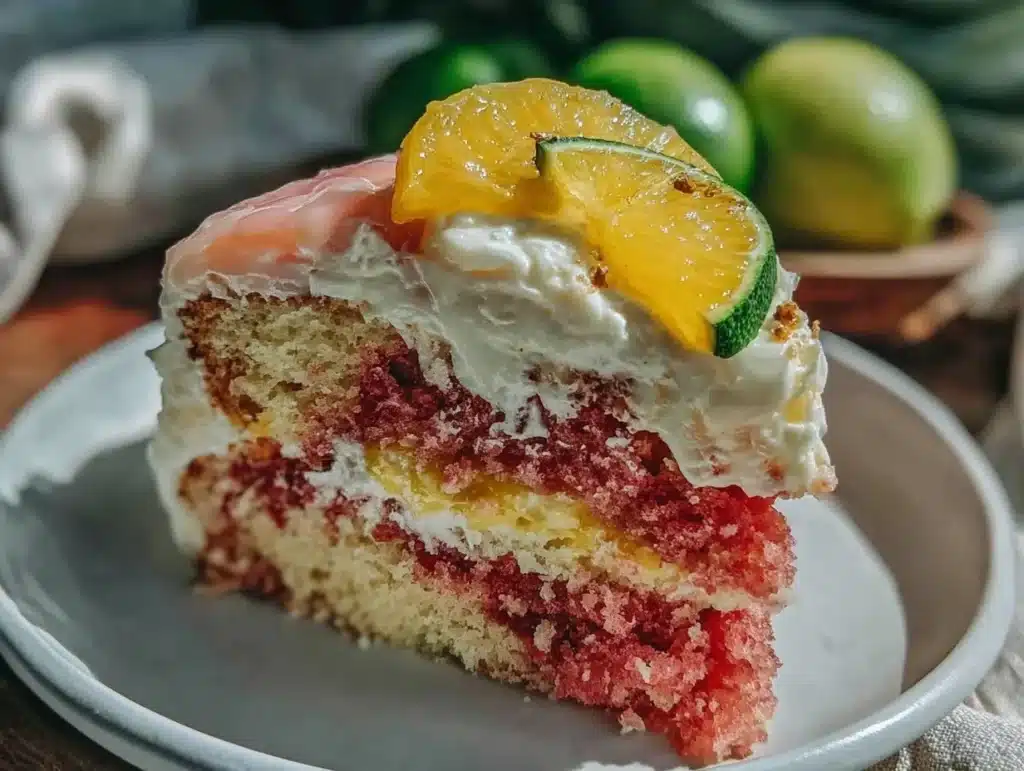
The moment that first slice of Tropical Guava Cake hit my tongue, I was instantly transported back to a humid afternoon in Puerto Rico. It wasn’t just a dessert; it was a memory wrapped in sugar and citrus. I remember sitting on my abuela’s porch, watching the rain hit the palm trees, while she handed me a plate of this dense, fragrant cake. The smell of guava paste mixed with vanilla and a hint of rum was so potent it filled the entire house. Honestly, that scent is still the most powerful trigger for nostalgia I know.
Since moving away from the islands, I’ve spent years trying to recreate that exact flavor profile. Most versions I’ve tried are too sweet or lack that deep, fruity punch that defines the real thing. You know how some cakes taste like artificial candy? This Tropical Guava Cake Recipe is nothing like that. It’s earthy, tangy, and incredibly moist. I’ve tested this recipe over a dozen times to get the balance of guava paste, butter, and flour just right. It’s not complicated, but it does require a bit of patience to let the flavors meld properly.
I developed this specific version because I wanted something that felt special but was still easy enough for a weeknight. Whether you are hosting a summer barbecue or just craving a treat that feels exotic, this cake delivers. It’s perfect for people who love bold flavors without the heavy texture of a traditional pound cake. The crumb is tender, and the glaze adds a nice crunch. I’ve shared this with friends who usually stick to chocolate, and they were completely won over. If you’re looking for a way to bring some tropical vibes to your kitchen, this is the one.
What makes this recipe stand out is the use of real guava paste, not just juice. It creates a depth of flavor that you can’t fake. I’ve also added a splash of dark rum to the syrup, which isn’t strictly necessary but takes it to the next level. As someone who has baked this many times, I can tell you that the secret is in the soaking process. You have to let the cake absorb the syrup while it’s still warm. Trust me on this one. It changes the entire texture, making it incredibly juicy. This isn’t just another fruit cake; it’s a celebration of tropical ingredients that are easy to find and simple to use.
Why You’ll Love This Recipe
After spending years perfecting this Tropical Guava Cake Recipe, I can confidently say it’s the most rewarding baking project you’ll tackle this year. It’s not just about the taste, though that is incredible. It’s about the experience of creating something that feels luxurious yet approachable. I’ve tested this with various flours and sweeteners, and this specific combination remains the gold standard. It’s reliable, delicious, and always gets compliments.
- Quick & Easy: Despite its exotic flavor, this cake comes together in under an hour of active prep. You don’t need complex techniques or expensive equipment. It’s perfect for busy weeknights or when you need a dessert ready in a pinch.
- Simple Ingredients: You likely have most of these items in your pantry. Guava paste is now available in most major grocery stores, usually in the international aisle. The rest are basic staples like flour, sugar, and eggs. No fancy grocery trips needed.
- Perfect for Summer: This cake shines during warmer months. It’s light enough for a post-lunch treat but substantial enough to satisfy a sweet tooth. It pairs beautifully with iced tea or coffee.
- Crowd-Pleaser: I’ve served this at potlucks and family gatherings, and it always disappears fast. Even people who are skeptical of fruit-based desserts love it. The flavor is familiar yet unique.
- Unbelievably Delicious: The combination of tangy guava and sweet butter creates a complex flavor profile. The texture is moist and dense, similar to a brownie but with a fruity twist. It’s comfort food with a tropical twist.
What really makes this recipe different is the attention to detail in the syrup soak. Many fruit cakes end up dry, but this one stays moist for days. The guava paste is cooked down slightly before mixing, which concentrates the flavor. I learned this trick after a few failed attempts where the cake tasted a bit bland. By reducing the guava first, you ensure every bite is packed with flavor. It’s a small step that makes a huge difference. This isn’t just a cake; it’s a memory you can eat. It’s the kind of dessert that makes you close your eyes and sigh after the first bite.
What Ingredients You Will Need
This recipe relies on a few key ingredients to achieve that authentic tropical taste. The star, obviously, is the guava paste. You want to use the firm kind found in the baking aisle, not the soft spreadable type. It needs to be chopped finely so it melts evenly into the batter. I recommend using a high-quality brand like Doña Maria or La Costeña, as they have the best texture and flavor consistency. Using a cheap alternative might result in a grainy batter or artificial taste.
Next, you’ll need unsalted butter. I use salted butter in some versions, but unsalted gives you more control over the final salt level. Make sure it’s softened to room temperature. This helps it cream properly with the sugar, creating air pockets that make the cake light. If you’re dairy-free, you can substitute with a high-quality plant-based butter, though the flavor will be slightly different.
You’ll also need all-purpose flour for structure. I’ve tried using cake flour, but the result is too tender and falls apart. All-purpose gives that perfect balance of chew and crumb. Baking powder and baking soda are your leavening agents. Don’t skip these, as they help the cake rise properly. Salt is crucial too, even in a sweet cake. It balances the intense sweetness of the guava and enhances the other flavors.
For the syrup, you’ll need more guava paste, water, and sugar. Some people add a splash of rum, which I highly recommend for adults. It adds a warm, boozy note that complements the fruit. If you’re baking for kids, you can skip the rum or use rum extract. Vanilla extract is also important for rounding out the flavors. Use pure vanilla, not imitation, for the best aroma. Eggs provide richness and structure. I use large eggs, preferably organic, for the best color and flavor.
Finally, you might want some extra guava paste for decoration or a crumble topping. This adds visual appeal and extra bursts of flavor. I like to chop it into small pieces and fold some into the batter before baking. It creates little pockets of gooey fruit. The ingredient list is short, which is part of its charm. You don’t need a dozen items to make something this good. Just focus on quality. Fresh, good ingredients make all the difference. If you can’t find guava paste, you can try using guava nectar, but the texture will be wetter and the flavor less intense. Stick to the paste for the best results.
Equipment Needed
You don’t need a lot of fancy gear to make this cake. A standard 9×13 inch baking pan is ideal. I’ve tried using round pans, but the baking time changes, and the shape isn’t as practical for serving. A 9×13 pan gives you nice, square slices that are easy to portion. Make sure to grease the pan well with butter or non-stick spray. Lining it with parchment paper is a good idea for easy removal.
A large mixing bowl is necessary for combining the dry ingredients. A medium bowl works for the wet ingredients. I prefer using a hand mixer or a stand mixer for creaming the butter and sugar. It saves time and ensures the mixture is light and fluffy. If you mix by hand, you’ll need to put in some elbow grease. It’s doable, but it takes longer. A whisk is helpful for the dry ingredients to break up any lumps.
You’ll also need a saucepan for making the syrup. A small to medium-sized saucepan works best. Make sure it has a heavy bottom to prevent burning the sugar. A wooden spoon or silicone spatula is great for stirring the syrup. For the cake batter, a rubber spatula is essential for folding in the guava paste without deflating the mixture. Be gentle to keep the cake airy.
Measuring cups and spoons are, of course, required. Precision matters in baking, so use standard measuring tools. A kitchen scale is optional but helpful for accuracy, especially for the flour. If you use cups, spoon the flour into the cup and level it off. Don’t scoop directly from the bag, as it packs too much flour. Finally, a cooling rack is needed to let the cake cool evenly. Placing it on a counter can lead to soggy bottoms. These tools are likely already in your kitchen, so no need to buy anything special.
Preparation Method
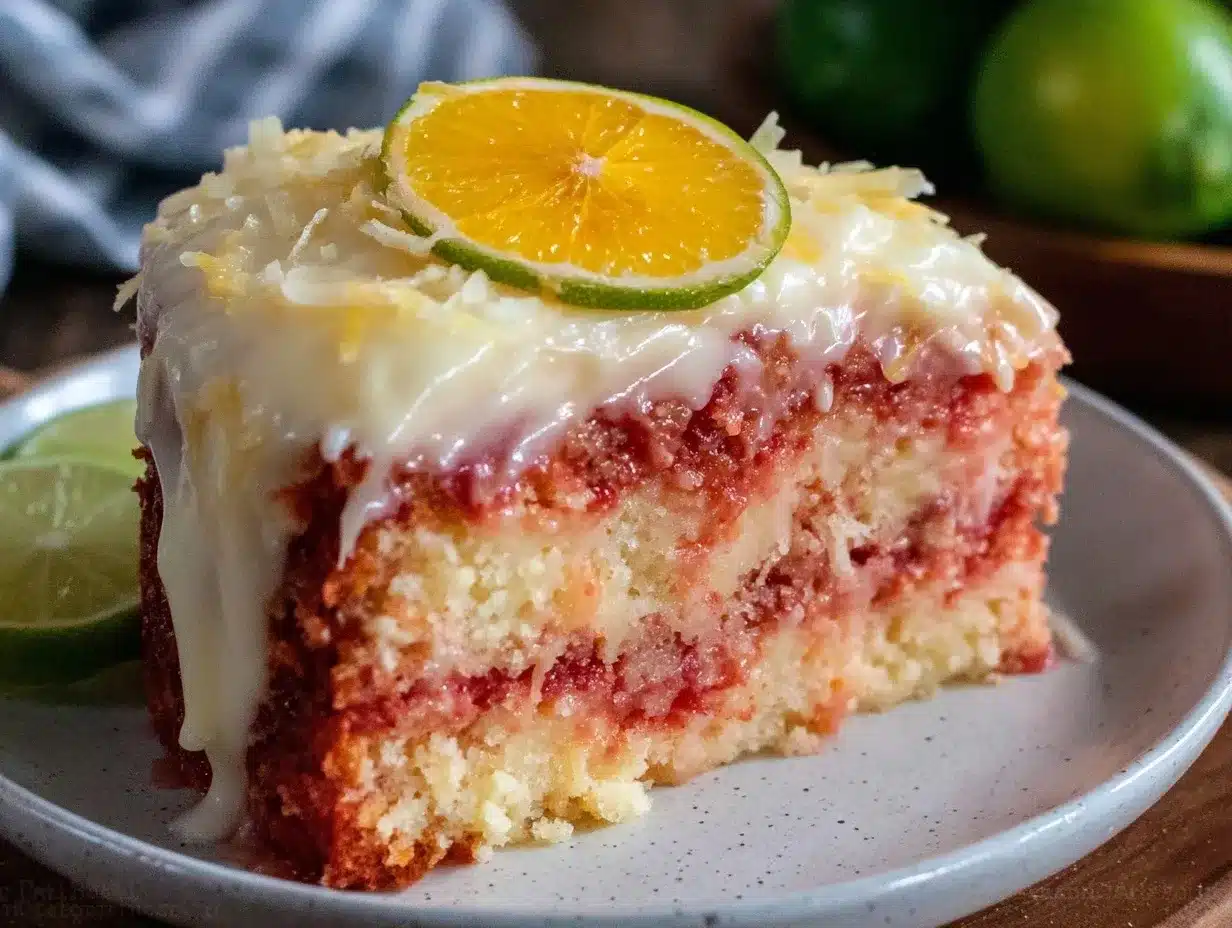
Start by preheating your oven to 350°F (175°C). Grease your 9×13 inch baking pan and line it with parchment paper. This step is crucial for easy removal later. Set the pan aside and prepare your ingredients.
In a medium bowl, whisk together the all-purpose flour, baking powder, baking soda, and salt. Set this aside. In a large bowl, cream the softened butter and sugar together using a hand mixer on medium speed. Beat for about 3-4 minutes until the mixture is light and fluffy. This process incorporates air, which helps the cake rise. It’s important not to rush this step.
Add the eggs one at a time, beating well after each addition. Mix in the vanilla extract. In a separate small bowl, chop the guava paste into very small pieces. If it’s too hard to chop, microwave it for 10-15 seconds to soften it slightly. Fold the chopped guava paste into the butter mixture gently. Be careful not to overmix, or the cake will become dense.
Alternately add the dry ingredients and any remaining liquid (like a splash of milk if needed for consistency) to the wet mixture. Start and end with the dry ingredients. Mix until just combined. Pour the batter into the prepared pan and smooth the top with a spatula.
Bake for 35-40 minutes, or until a toothpick inserted into the center comes out clean. While the cake is baking, prepare the syrup. In a small saucepan, combine the remaining guava paste, water, and sugar. Heat over medium heat, stirring until the guava dissolves and the mixture boils. Simmer for 5 minutes. Remove from heat and stir in the rum if using.
Once the cake is done, remove it from the oven. Immediately poke holes all over the surface with a skewer or toothpick. Slowly pour the warm syrup over the hot cake. Let it sit for 10 minutes to absorb the syrup. This step is vital for moisture. Let the cake cool completely in the pan before slicing. This allows the structure to set.
Cooking Tips & Techniques
One common mistake people make is overmixing the batter. Once you add the flour, mix only until it disappears. Overmixing develops gluten, which leads to a tough cake. I learned this the hard way after my first attempt came out like a brick. Be gentle when folding in the guava paste. Another tip is to ensure your butter is at the right temperature. If it’s too cold, it won’t cream properly. If it’s too warm, the cake can spread too much. Room temperature is key.
When making the syrup, keep an eye on it. Sugar can burn quickly. Stir constantly once it starts to boil. If the syrup gets too thick, add a little more water. The consistency should be like a thin honey. Don’t let it become a hard candy. Also, pour the syrup over the cake while both are warm. If the cake is cold, it won’t absorb the syrup well. The heat helps it penetrate the crumb.
Timing is everything. Check the cake at 35 minutes. Ovens vary, so the toothpick test is your best friend. If it comes out with wet batter, give it more time. If it comes out clean, it’s done. Don’t overbake, or the cake will dry out. Letting the cake cool in the pan is also important. If you try to slice it while it’s hot, it might fall apart. Patience pays off here.
For consistent results, use the same brand of guava paste every time. Flavors can vary between brands. I’ve found that some are sweeter than others. Adjust the sugar in the batter slightly if you use a very sweet paste. Multitasking can help here. While the cake bakes, make the syrup. This saves time and ensures the syrup is ready when the cake is done. It also helps with the temperature coordination.
Variations & Adaptations
This recipe is quite versatile, and you can make several changes to suit your preferences. For a dairy-free version, use plant-based butter and skip the milk if added. The texture might be slightly different, but the flavor will still be great. You can also use almond flour for a gluten-free option, but you’ll need to adjust the liquid slightly as almond flour absorbs more moisture.
If you want a richer flavor, add a teaspoon of rum extract to the batter. It adds depth without the alcohol. For a tropical twist, fold in some chopped pineapple or mango. These fruits pair well with guava and add extra moisture. However, be careful not to add too much, as it can make the batter too wet. Drain any canned fruit thoroughly before adding.
For a healthier version, reduce the sugar in the batter by a quarter. The guava paste is already sweet, so you might not miss it. You can also use whole wheat flour for added fiber, though the texture will be denser. I’ve tried using coconut sugar, which adds a caramel note. It works well but changes the color to a darker brown.
Another variation is to add a cream cheese frosting. While the syrup-soaked cake is delicious on its own, a thin layer of cream cheese frosting adds a tangy contrast. I usually mix cream cheese, powdered sugar, and a little vanilla. Spread it over the cooled cake. This is great for special occasions. For a simpler option, just dust with powdered sugar. It’s elegant and lets the guava flavor shine.
I also like to add a crumble topping made with oats, brown sugar, and butter. It adds a nice crunch and visual appeal. Sprinkle it on before baking. It’s a great way to use up leftover oats. Each variation brings something unique to the table. Feel free to experiment and find your favorite combination. The base recipe is a solid foundation for creativity.
Serving & Storage Suggestions
This cake is best served at room temperature. Cold cake can make the guava flavor less vibrant. I recommend serving it with a cup of hot coffee or tea. The bitterness of the coffee balances the sweetness of the cake. It’s also great with a glass of cold milk. For a more indulgent treat, serve it with a scoop of vanilla ice cream. The warm cake and cold ice cream create a nice contrast.
For presentation, cut the cake into neat squares. Dust the top with powdered sugar for a clean look. You can also garnish with fresh mint leaves or a slice of lime. It adds a pop of color and freshness. If you’re serving it at a party, arrange the slices on a platter with some extra guava paste on the side for dipping. It’s a fun interactive element.
Store leftovers in an airtight container at room temperature for up to three days. The syrup keeps the cake moist, so it doesn’t need refrigeration. If you live in a very hot or humid climate, refrigerate it to prevent spoilage. Before serving from the fridge, let it come to room temperature. This restores the texture and flavor.
For longer storage, you can freeze the cake. Wrap individual slices tightly in plastic wrap and then in aluminum foil. They will last for up to two months in the freezer. Thaw overnight in the refrigerator or at room temperature. The flavor holds up well after freezing. Avoid freezing the cake with frosting, as the texture can change. Frost it after thawing if desired.
The flavors actually develop over time. I’ve found that the cake tastes even better the next day as the syrup fully penetrates the crumb. It’s worth waiting if you can. Just make sure to cover it well to prevent it from drying out. Enjoy this tropical treat whenever the mood strikes.
Nutritional Information & Benefits
While this cake is a treat, it’s not entirely devoid of nutritional value. Guava is rich in Vitamin C and fiber, which supports immune health and digestion. The fruit adds natural sweetness, reducing the need for excessive added sugar. However, it’s still a dessert, so enjoy in moderation. A typical slice contains around 300-400 calories, depending on the size and syrup absorption.
The recipe contains gluten from the all-purpose flour, so it’s not suitable for those with celiac disease unless modified. It also contains dairy and eggs. For those with allergies, the variations section offers some alternatives. The rum is optional and can be omitted for children or non-drinkers. The nutritional profile is balanced with carbs, fats, and some protein.
I personally enjoy this cake as a weekend indulgence. It’s a way to treat myself without feeling guilty, as long as I balance it with a healthy diet otherwise. The natural fruit content makes it feel slightly healthier than a plain chocolate cake. It’s a guilt-free pleasure when enjoyed in reasonable portions. Always listen to your body and eat what feels right for you.
Conclusion
Making this Tropical Guava Cake Recipe is a journey into flavor and nostalgia. It’s simple, delicious, and deeply satisfying. I hope you try it and create your own memories with it. Feel free to customize it with your favorite additions. Whether you add rum, fruit, or frosting, make it your own. Share it with friends and family, and watch their faces light up. I’d love to hear how it turns out for you. Leave a comment below with your thoughts or photos of your creation. Happy baking!
Frequently Asked Questions
Can I use guava juice instead of guava paste?
It’s not recommended. Guava paste provides the necessary texture and concentrated flavor. Juice will make the batter too wet and the flavor too mild. If you must, reduce the liquid in the recipe significantly, but paste is best.
How do I know when the cake is done baking?
Insert a toothpick into the center. If it comes out clean or with a few moist crumbs, it’s done. If it has wet batter, bake for another 5 minutes. The top should also be golden brown.
Can I freeze this cake?
Yes, wrap individual slices tightly in plastic and foil. Freeze for up to two months. Thaw in the fridge or at room temperature before serving.
Is the rum necessary?
No, it’s optional. It adds depth of flavor, but the cake is delicious without it. You can substitute with rum extract or skip it entirely.
How long does the cake last?
Store in an airtight container at room temperature for up to three days. In hot weather, refrigerate for up to five days. It tastes best at room temperature.
Pin This Recipe!
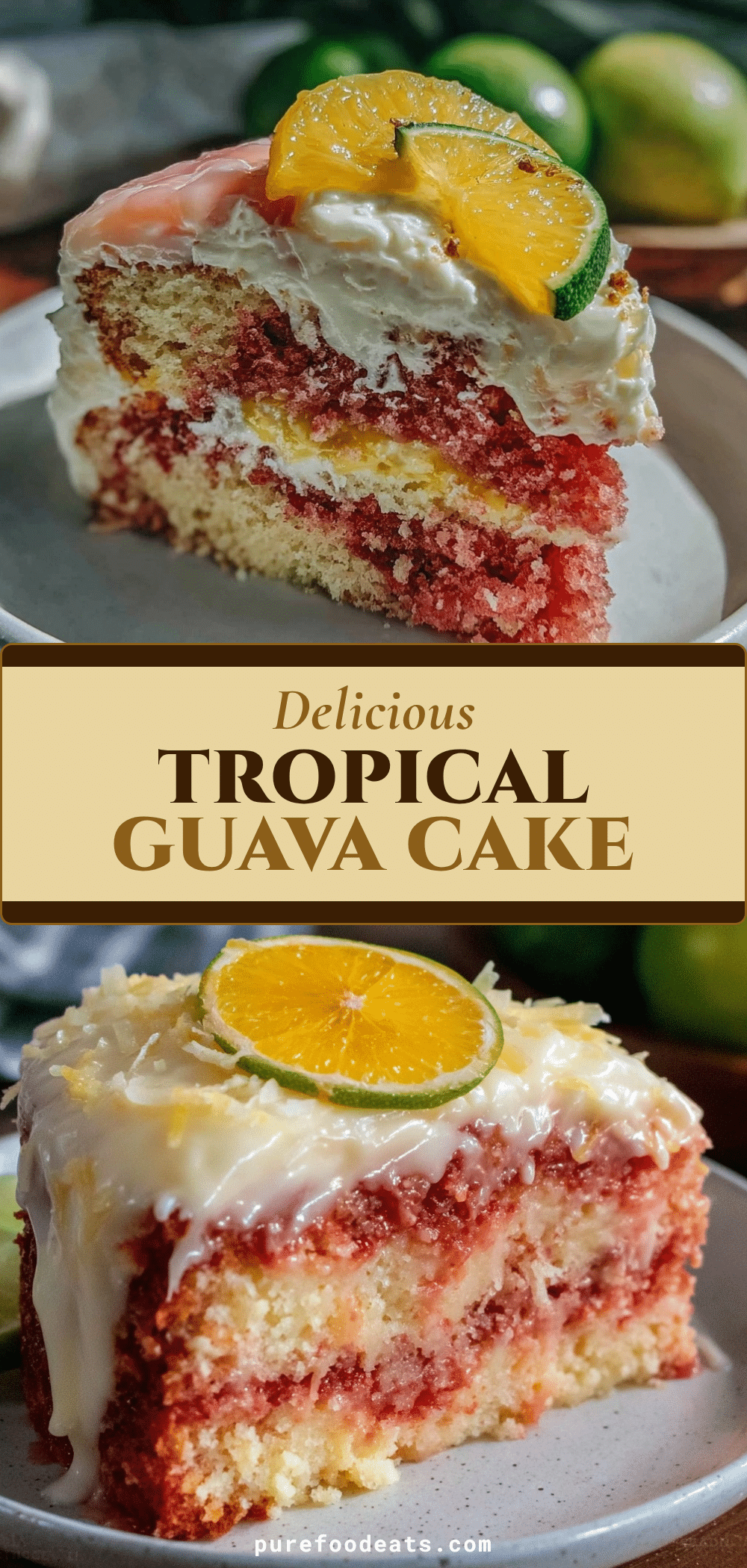
Tropical Guava Cake Recipe
- Total Time: 1 hour
- Yield: 12 servings 1x
Description
A moist, dense, and fragrant tropical cake infused with real guava paste and a rum-soaked syrup. This recipe delivers an earthy, tangy flavor profile that captures the nostalgia of Puerto Rican desserts while being easy enough for weeknight baking.
Ingredients
- 2 cups all-purpose flour
- 1 tsp baking powder
- 1/2 tsp baking soda
- 1/2 tsp salt
- 1 cup unsalted butter, softened to room temperature
- 1 1/2 cups granulated sugar
- 4 large eggs
- 1 tsp pure vanilla extract
- 1/2 cup firm guava paste, chopped finely
- 1/2 cup water
- 1/2 cup granulated sugar (for syrup)
- 1/2 cup firm guava paste (for syrup)
- 2 tbsp dark rum (optional)
- Splash of milk (if needed for batter consistency)
Instructions
- Preheat oven to 350°F (175°C). Grease a 9×13 inch baking pan and line with parchment paper.
- In a medium bowl, whisk together flour, baking powder, baking soda, and salt. Set aside.
- In a large bowl, cream softened butter and sugar with a hand mixer on medium speed for 3-4 minutes until light and fluffy.
- Add eggs one at a time, beating well after each addition. Mix in vanilla extract.
- Chop guava paste into very small pieces (microwave for 10-15 seconds if too hard). Fold chopped guava paste gently into the butter mixture.
- Alternately add dry ingredients and milk (if using) to the wet mixture, starting and ending with dry ingredients. Mix until just combined.
- Pour batter into prepared pan and smooth top.
- Bake for 35-40 minutes or until a toothpick inserted in the center comes out clean.
- While cake bakes, combine remaining guava paste, water, and sugar in a saucepan. Heat over medium, stirring until dissolved and boiling. Simmer for 5 minutes. Remove from heat and stir in rum if using.
- Immediately poke holes all over the hot cake with a skewer. Slowly pour warm syrup over the cake.
- Let cake sit for 10 minutes to absorb syrup, then cool completely in the pan before slicing.
Notes
Use firm guava paste found in the baking aisle, not soft spreadable type. Ensure butter is at room temperature for proper creaming. Do not overmix the batter to avoid a tough texture. Pour syrup over the cake while both are warm for best absorption. The cake tastes even better the next day as flavors meld.
- Prep Time: 20 minutes
- Cook Time: 40 minutes
- Category: Dessert
- Cuisine: Puerto Rican
Nutrition
- Serving Size: 1 square slice
- Calories: 350
- Sugar: 38
- Sodium: 180
- Fat: 14
- Saturated Fat: 8
- Carbohydrates: 52
- Fiber: 1
- Protein: 4
Keywords: guava cake, tropical dessert, guava paste recipe, rum cake, moist cake, Puerto Rican baking, easy dessert